Heading
Key highlights
- Why traditional marketing struggles to influence SEO ranking
- How SEO marketing compounds website ranking over time
- A timeline view of short-term vs long-term impact
- How businesses should balance both approaches
For years, traditional marketing dominated how businesses thought about growth.
Campaigns. Launches. Bursts of visibility. Short-term attention.
SEO marketing changed that model completely.
Today, businesses trying to improve SEO ranking often ask whether traditional marketing still matters or if SEO marketing alone can drive long-term website ranking. The answer isn’t binary, but the differences between the two approaches are fundamental.
This blog breaks down how each works, what impact they have on SEO ranking, and why one compounds while the other fades.
The core difference in mindset
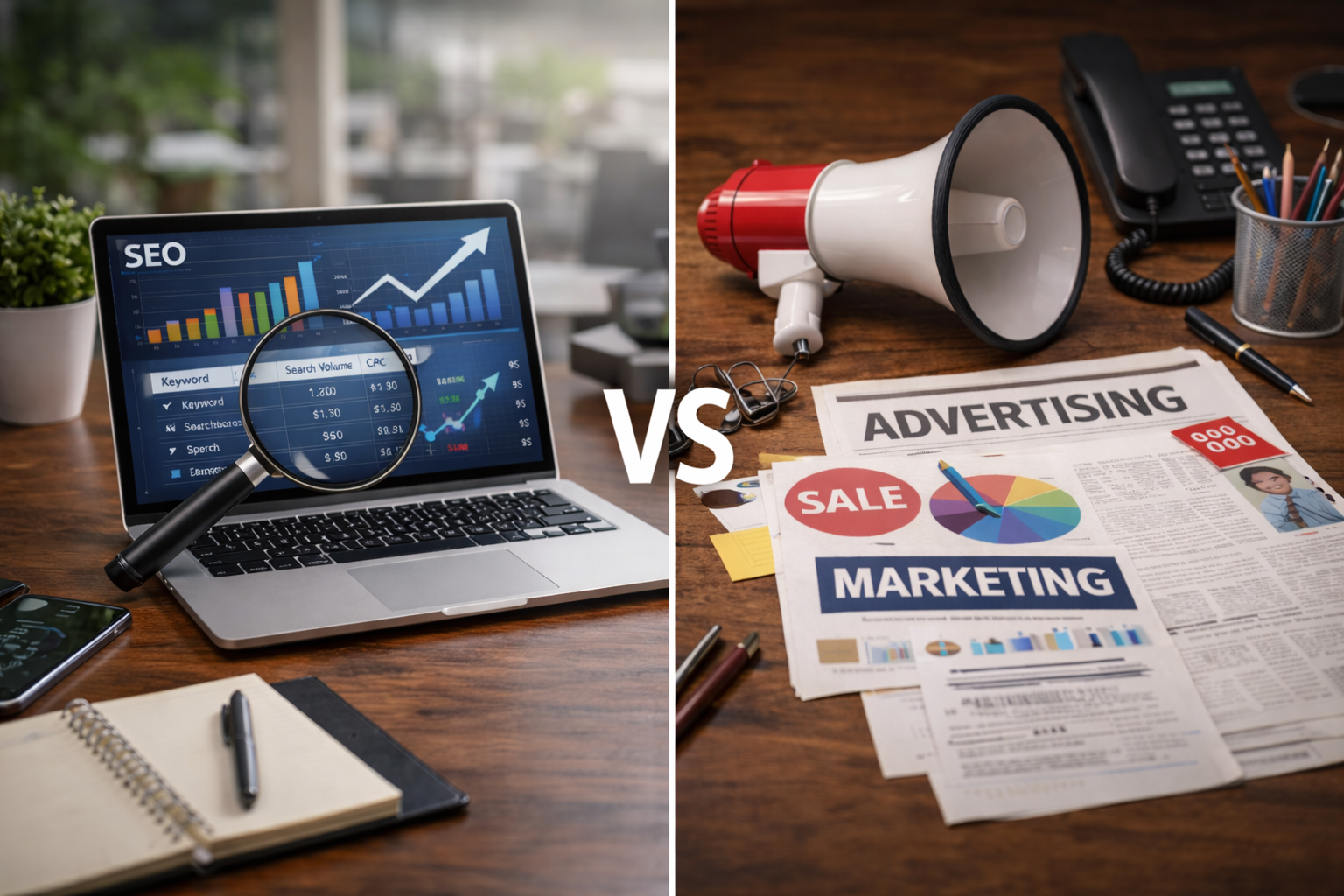
Traditional marketing is campaign-led.
SEO marketing is system-led.
Traditional marketing focuses on:
- Fixed timelines
- Immediate reach
- Paid or push-driven visibility
SEO marketing focuses on:
- Ongoing discovery
- Search-led demand
- Compounding visibility over time
This difference in mindset is what determines long-term SEO ranking outcomes.
How traditional marketing impacts SEO ranking (indirectly)
Traditional marketing includes:
- Advertising
- PR campaigns
- Offline promotions
- Short-term digital campaigns
These efforts can influence brand awareness and traffic spikes, but they rarely improve SEO ranking directly.
Why?
Because traditional marketing:
- Does not consistently create searchable assets
- Does not build long-term intent-driven content
- Stops working once campaigns end
This means most discovery happens outside campaign touchpoints — especially through search.
How SEO marketing influences SEO ranking directly
SEO marketing is designed around how people search, research, and decide.
It focuses on:
- Creating content aligned with search intent
- Structuring websites for discoverability
- Building topical authority over time
Every piece of SEO marketing becomes a long-term asset. Unlike campaigns, SEO marketing doesn’t stop working when budgets pause.
This is why SEO ranking improves gradually — and then compounds.
Stat 2: BrightEdge reports that organic search drives 53% of all website traffic, making SEO marketing the largest long-term acquisition channel.
A timeline view: what happens over 12 months
Months 1–3
- Traditional marketing delivers quick visibility
- SEO marketing shows minimal ranking movement
Months 4–6
- Traditional marketing impact plateaus or declines
- SEO ranking begins to stabilise and improve
Months 7–12
- Campaign impact fades unless reinvested
- SEO marketing compounds, improving website ranking across multiple pages
This timeline explains why businesses often underestimate SEO marketing early and overestimate traditional marketing long term.
Why SEO marketing compounds but traditional marketing doesn’t
SEO marketing compounds because:
- Content remains discoverable
- Internal linking strengthens authority
- Website ranking improves across related topics
Traditional marketing resets with every campaign.
SEO marketing builds memory into the system.
Once you rank well, visibility sustains without proportional spend.
Where traditional marketing still matters
This doesn’t mean traditional marketing is obsolete.
Traditional marketing works well for:
- Product launches
- Market entry
- Brand awareness pushes
- Short-term demand spikes
However, these efforts rarely improve website ranking unless paired with SEO marketing systems.
The most effective approach: integration, not replacement
High-performing businesses don’t choose one over the other.
They:
- Use traditional marketing for momentum
- Use SEO marketing for sustainability
SEO marketing creates the foundation. Traditional marketing adds acceleration.
When reversed, results are unstable.
Common mistake businesses make
The biggest mistake is expecting traditional marketing to improve SEO ranking.
Campaign traffic without intent alignment:
- Increases bounce rates
- Fails to build authority
- Doesn’t support long-term website ranking
SEO marketing requires patience — but it rewards consistency.
A simple decision lens
If your goal is:
- Immediate attention, then traditional marketing helps
- Long-term discoverability, SEO marketing is essential
- Sustainable SEO ranking, SEO marketing must lead
Understanding this prevents misaligned expectations.
To understand how this blog fits into the complete SEO system, read through our complete guide on SEO ranking here.
Final note
Traditional marketing gets attention.
SEO marketing earns discovery.
If long-term SEO ranking and website ranking matter, SEO marketing must be the foundation - not an afterthought.
Are you looking to build your brand’s online presence? Reach out to us today!
FAQs
1. Does traditional marketing improve SEO ranking?
Traditional marketing may increase awareness, but it does not directly improve SEO ranking.
2. Is SEO marketing slower than traditional marketing?
Yes initially, but SEO marketing compounds and delivers stronger long-term results.
3. Can businesses rely only on SEO marketing?
Yes for sustainable growth, but traditional marketing can support launches and spikes.
4. When does SEO marketing start improving website ranking?
Most businesses see meaningful SEO ranking improvements within 3–6 months.






























































-compressed.jpg)